

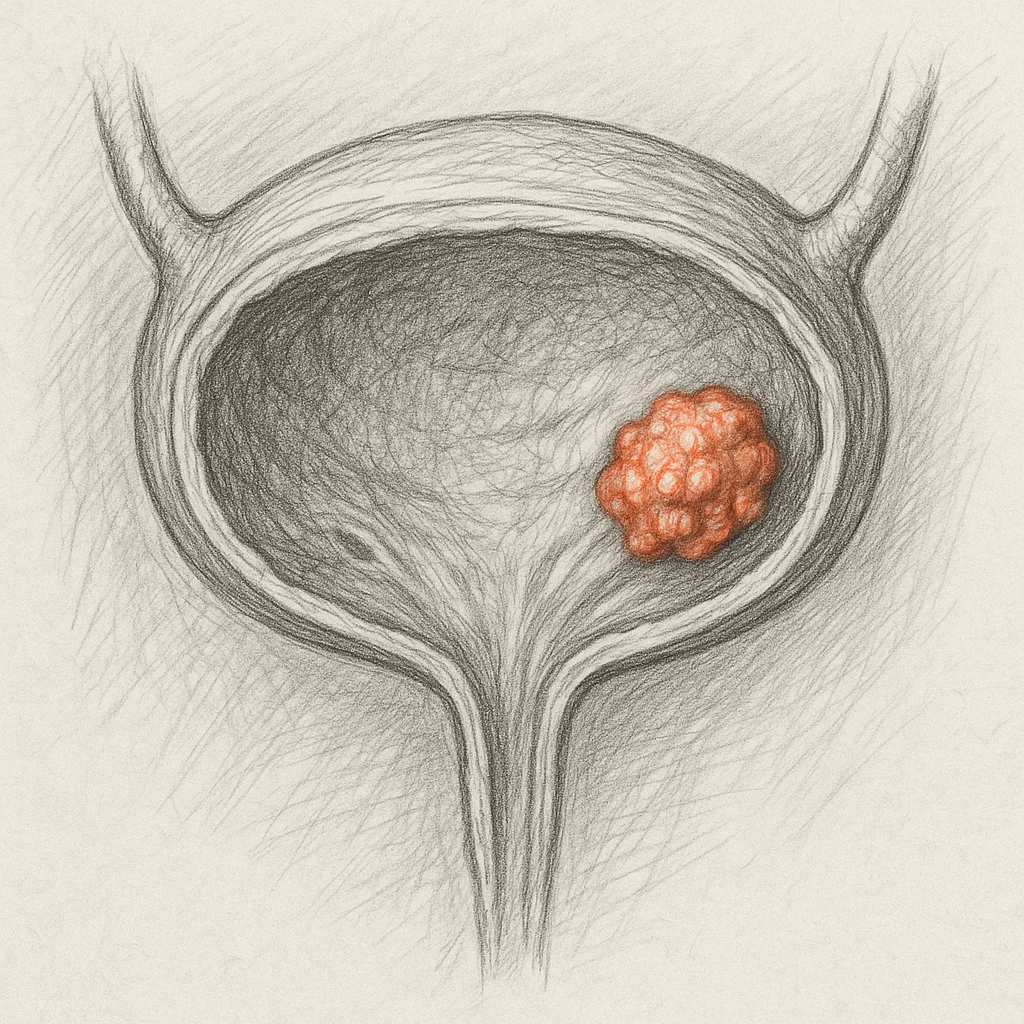

Atezolizumab combined with split-dose cisplatin/gemcitabine achieved a 48.5% objective response rate in patients with metastatic urothelial carcinoma (mUC) ineligible for full-dose cisplatin, but survival outcomes remain inferior to enfortumab vedotin plus pembrolizumab, which should remain first-line standard. This regimen may serve as an alternative when EV/pembrolizumab is unavailable or in highly selected frail patients preferring time-limited chemotherapy.
Study Design & Population
Phase II single-arm trial (SOGUG-AUREA)
- 66 patients with advanced/metastatic urothelial carcinoma
- Cisplatin-ineligible due to: age >70 years (54.5%), impaired renal function ClCr 30-60 mL/min (50%), ECOG PS 2 (22.7%)
- Treatment: Atezolizumab 1,200 mg IV q3weeks + cisplatin 35 mg/m² + gemcitabine 1,000 mg/m² on days 1&8 for up to 6 cycles
- Median age: 71 years; 86.4% male; 87.9% metastatic disease
Key Findings
- Primary endpoint: Objective response rate 48.5% (95% CI: 36-61%), exceeding null hypothesis of 30%
- Complete response: 10.6% (7 patients), partial response: 37.9% (25 patients)
- Median duration of response: 9.2 months (95% CI: 5.5-16.8+)
- Median progression-free survival: 6.9 months (95% CI: 6.7-9.4)
- Median overall survival: 12.9 months (95% CI: 10.2-20.2)
- 24-month OS rate: 30.1% (95% CI: 20.6-44.0)
- Grade 3-4 toxicities: neutropenia (31.8%), anemia (25.8%), thrombocytopenia (19.7%)
- Liver metastases associated with lower response rate (25% vs 77.8% for lymph-node only)
Clinical Implications
- Results inferior to EV/pembrolizumab (median OS 26.1 months), which remains preferred first-line therapy
- May serve as alternative when EV/pembrolizumab unavailable or contraindicated
- Particularly relevant in resource-limited settings or for patients preferring finite chemotherapy duration
- Supports cisplatin’s immunomodulatory advantages over carboplatin in combination with immunotherapy
Limitations
- Single-arm design without control group limits comparative assessment
- Brief follow-up and small sample size constrain survival outcome interpretations
- Age criterion (>70 years) for cisplatin ineligibility differs from standard Galsky criteria
- Indirect comparisons with other regimens due to different patient populations