

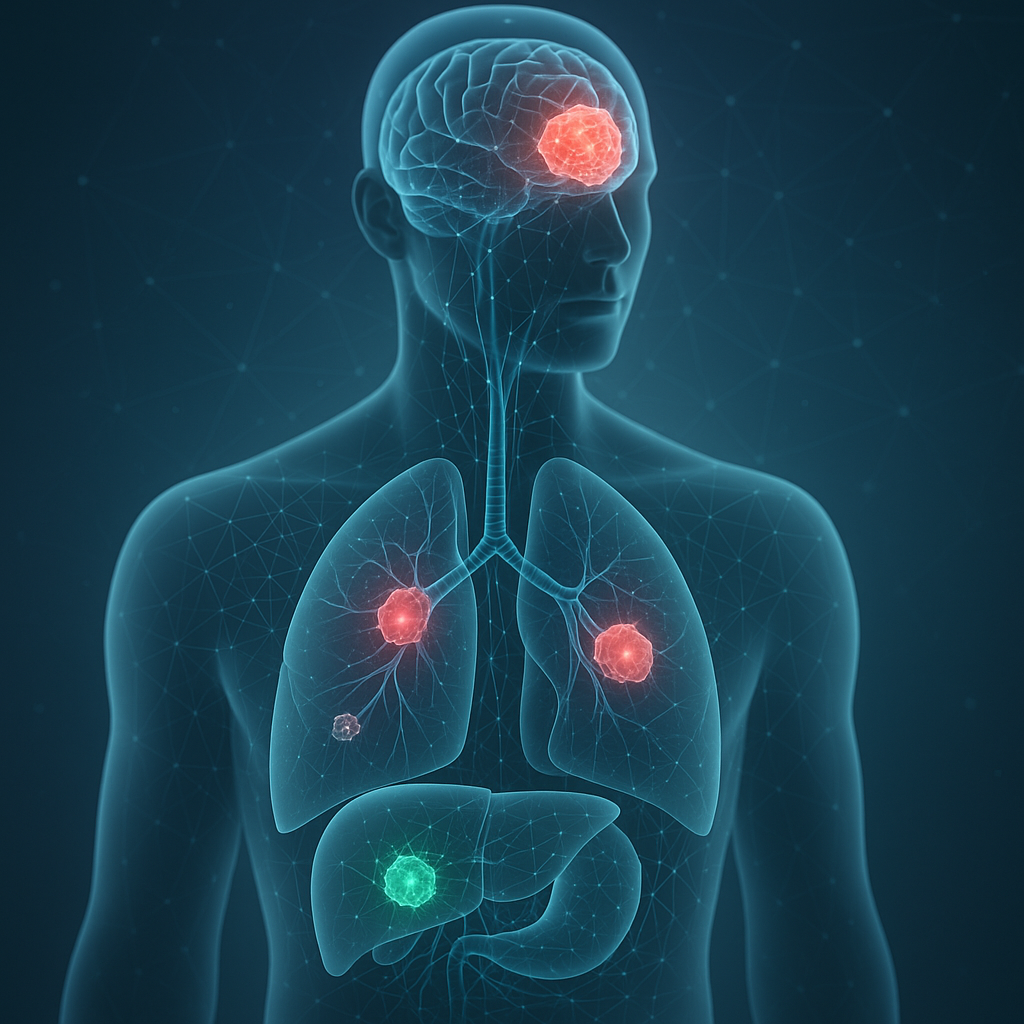

A real-time silent trial published in Nature Medicine demonstrates that an AI model can accurately predict EGFR mutations in lung adenocarcinoma from routine H&E pathology slides, potentially reducing reliance on rapid genetic testing by over 40 percent. This AI-driven approach using EGFR-targeted therapy biomarker detection could accelerate treatment decisions, preserve limited tumor tissue for comprehensive next-generation sequencing, and improve access to personalized cancer care in both high- and low-resource settings.
Study Design & Models
- Study design: Multi-institutional validation study with a prospective real-time “silent trial” at Memorial Sloan Kettering Cancer Center, plus retrospective analysis from hospitals across the United States and Europe
- Dataset: Largest dataset of lung adenocarcinoma pathology slides matched with next-generation sequencing results from multiple institutions
- Model system: Fine-tuned AI foundation model trained on routine H&E-stained pathology slides—standard pink-and-purple tissue images used in diagnostic biopsy
- Patient population: Patients with lung adenocarcinoma (most common type of lung cancer) requiring genetic mutation testing for treatment selection
- Methodology: AI analyzed live patient samples behind the scenes without clinician visibility to test real-world performance in predicting EGFR (epidermal growth factor receptor) mutations
Key Findings
- Primary finding: AI accurately predicted EGFR mutations directly from routine pathology slides, demonstrating reliable detection capability in real-time clinical workflow
- Efficiency gain: Model showed potential to reduce need for rapid genetic tests by more than 40 percent, preserving valuable tumor tissue for comprehensive sequencing
- Generalizability: AI performance validated across multiple institutions in United States and Europe, demonstrating broad applicability beyond single-center data
- Tissue preservation: By flagging EGFR-positive cases early, AI could help avoid rapid tests that consume limited biopsy material, leaving approximately one in four patients without sufficient tissue for next-generation sequencing in current workflows
- Clinical integration: First-of-its-kind real-time silent trial in pathology proved AI could be integrated into existing diagnostic pathways without disrupting clinical care
Clinical Translation Potential
- Treatment acceleration: AI predictions from digitized slides available immediately upon pathology processing could enable faster identification of patients eligible for EGFR-targeted therapies
- Resource optimization: Reducing redundant rapid genetic testing in high-resource settings decreases burden on sequencing labs and controls costs
- Access expansion: AI approach using standard pathology slides—already part of every patient’s diagnostic workup—could improve access to personalized treatment guidance in lower-resource settings with limited genetic testing availability
- Biomarker discovery: Foundation model approach demonstrates potential to uncover new prognostic and predictive biomarkers from routine pathology images beyond known mutations
- Regulatory pathway: Ongoing data collection through expanded silent trial across additional sites establishes framework for future FDA approval and clinical adoption
Limitations
- Confirmation requirement: AI predictions still require validation through advanced genetic testing before treatment decisions, as model serves as screening tool rather than diagnostic replacement
- Single biomarker focus: Current study validated EGFR mutation detection only; expansion to additional cancer biomarkers and mutation types requires further validation
- Generalizability constraints: While validated across US and European centers, performance in other geographic regions and healthcare settings remains to be established
- Model translation gaps: Fine-tuning approach requires large matched datasets of pathology slides and sequencing results, which may not be available for all cancer types or rare mutations
- Clinical workflow integration: Real-world implementation requires digitization of pathology slides and integration with existing laboratory information systems, representing infrastructure barriers in some settings