
From The BackTable Podcast

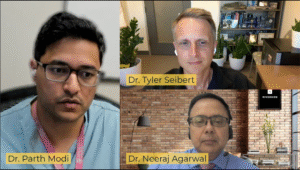
Dr. Neeraj Agarwal, Dr. Parth Modi, and Dr. Tyler Seibert examine modern management of biochemical recurrence after definitive radiation, with a focus on the Phoenix definition, PSMA PET imaging, metastasis-directed therapy (MDT), and the evolving role of short-term androgen deprivation therapy (ADT) and AR pathway inhibitors (ARPIs).
The panel reviews how clinicians should interpret PSA rises after radiation, emphasizing that while the Phoenix criterion (nadir + 2 ng/mL) remains the formal definition of recurrence, clinical judgment often prompts earlier evaluation—particularly when PSA trends upward. They discuss evidence from phase II trials such as STOMP and ORIOLE, which show that MDT with SBRT can safely delay systemic therapy, preserving quality of life for patients reluctant to begin lifelong ADT.
The conversation also explores the nuanced decision-making around combining MDT with short-term ADT for radiosensitization, acknowledging that this approach remains a “data-free zone” without level-1 evidence. The group highlights recently published data (e.g., RADIOSA) and the unmet need for trials evaluating whether brief hormonal therapy meaningfully improves long-term outcomes.
Finally, the experts discuss how tumor genomics—including alterations in TP53, ATM, BRCA2, and RB1—may influence MDT responsiveness. They review emerging trials such as KNIGHTS, which integrate genetic profiling with salvage radiation strategies and PARP inhibition, signaling a future where molecular risk stratification may help personalize treatment escalation.
Contributors:

Dr. Neeraj Agarwal is a professor of medicine, and a Presidential Endowed Chair of Cancer Research at the Huntsman Cancer Institute (HCI), University of Utah. He also directs the Genitourinary Oncology (GU) Program, and the Center of Investigational Therapeutics (CIT) at the HCI.
Dr. Parth Modi is a urologic oncologist at the University of Chicago in Chicago, Illinois.

Dr. Tyler Seibert is a radiation oncologist and Assistant Professor in the the Division of Radiation Oncology at UC San Diego School of Medicine in San Diego, California.