
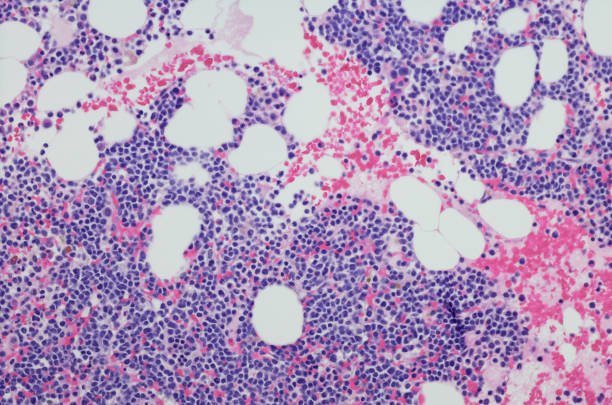

This article reviews recent pivotal trials and consensus updates in multiple myeloma (MM), highlighting advances in immunotherapy, proteasome inhibitor-based induction, and risk-adapted strategies. The MajesTEC-3 trial explores a bispecific BCMA-directed antibody plus Daratumumab in relapsed/refractory MM, offering a non-chemotherapy approach that may improve depth and durability of response. The COBRA trial compares carfilzomib- versus bortezomib-based induction in newly diagnosed patients, informing optimal first-line therapy. Additionally, the first IMS–IMWG consensus on high-risk MM provides a genomics-informed framework to identify aggressive disease and guide personalized treatment intensity. Together, these developments support clinicians in integrating targeted, immune-based, and risk-adapted strategies to optimize patient outcomes.
MajesTEC-3 Trial (NCT05083169)1
Overview
- Phase 3 randomized trial comparing subcutaneous Teclistamab + Daratumumab (“Tec-Dara”) against two standard-of-care regimens, Daratumumab + Pomalidomide + Dexamethasone (DPd) or Daratumumab + Bortezomib + Dexamethasone (DVd), in patients with R/R MM who have had 1-3 prior lines of therapy.
Significance
- By combining a BCMA-directed bispecific antibody (Teclistamab) with a CD38-targeted therapy (Daratumumab), this study tests a non-chemotherapy, immune-based doublet that may offer enhanced efficacy over traditional regimens and possibly improve response rates, depth of response, and durability while maintaining manageable toxicity.
Clinical Implications
- If Tec-Dara demonstrates superior outcomes, the regimen could shift the standard of care for R/R myeloma toward a bispecific + CD38-antibody backbone, offering a more effective and potentially better-tolerated alternative to PI- or IMiD-based combinations. As such, this trial may help expand the role of immunotherapy-driven regimens earlier in the myeloma relapse setting.
COBRA Trial (NCT03729804)2
Overview
- Phase 3 randomized study in newly diagnosed, previously untreated MM that compares standard induction regimens: carfilzomib + lenalidomide + dexamethasone (KRd) versus bortezomib + lenalidomide + dexamethasone (VRd).
Significance
- By directly contrasting a second-generation proteasome inhibitor (carfilzomib) regimen against the widely used bortezomib-based backbone, this trial aims to determine whether KRd can offer superior efficacy, deeper remission, or improved tolerability in first-line MM. This head-to-head design helps clarify optimal induction therapy in newly diagnosed patients.
Clinical Implications
- If KRd demonstrates better progression-free survival or deeper responses compared with VRd, this could shift frontline MM treatment toward a more potent proteasome inhibitor-based regimen that may influence induction strategies, especially in transplant-eligible and transplant-deferred patients, and help refine initial therapy choices.
First Consensus Definition of High-Risk MM (HRMM)3
Overview
- The IMS–IMWG published a consensus definition of high-risk MM (HRMM) integrating genomic abnormalities and modern treatment-era outcomes. Key markers include del(17p) or TP53 mutation, high-risk IgH translocations (t(4;14), t(14;16), t(14;20)) with additional abnormalities, and +1q or del(1p32).
Significance
- Previous risk models were inconsistent and often failed to predict outcomes accurately in the era of modern therapies. The new definition provides a standardized, genomics-informed framework for identifying patients with aggressive disease.
Clinical Implications
- Adopting this consensus allows clinicians to stratify patients more reliably, guide therapy intensity, and design clinical trials for HRMM. Early data show HRMM patients defined by this framework have shorter progression-free survival, highlighting its prognostic value.
Sources:
- “A Study of Teclistamab in Combination with Daratumumab Subcutaneously (SC) (Tec-Dara) versus Daratumumab SC, Pomalidomide, and Dexamethasone (DPd) or Daratumumab SC, Bortezomib, and Dexamethasone (DVd) in Participants with Relapsed or Refractory Multiple Myeloma (MajesTEC-3).” Clinicaltrials.gov, 7 Nov. 2025, clinicaltrials.gov/study/NCT05083169. Accessed 3 Dec. 2025.
- “Carfilzomib, Lenalidomide, and Dexamethasone versus Bortezomib, Lenalidomide and Dexamethasone (KRd vs. VRd) in Patients with Newly Diagnosed Multiple Myeloma (COBRA) ((COBRA)).” Clinicaltrials.gov, 3 Oct. 2025, clinicaltrials.gov/study/NCT03729804. Accessed 3 Dec. 2025.
- Hervé Avet-Loiseau, et al. “International Myeloma Society/International Myeloma Working Group Consensus Recommendations on the Definition of High-Risk Multiple Myeloma.” Journal of Clinical Oncology, 9 June 2025, https://doi.org/10.1200/jco-24-01893.