
As the oncology field enters 2026, leading experts anticipate a structural shift in cancer science and care that will move efforts away from reactive treatment and toward early detection, anticipatory intervention, and overall prevention. A recent article published by the American Association for Cancer Research (AACR) interviewed expert voices in oncology to better understand how recent advances in cancer prevention and interception, immunotherapies, and artificial intelligence (AI) converge to redefine the course of oncology research and clinical care in 2026.
Advances in Cancer Prevention & Interception

Dr. William Hait, Chief Scientific Advisor of the AACR, presented the coming year as an inflection point marked by upstream thinking, with prevention rooted in mechanistic biology, interception of premalignant states, and early detection supported by computational diagnostics.1 He argued that meaningful reductions in cancer incidence are dependent on the identification and treatment of measurable biological transitions before clinical disease onset. Current examples, including intervention in ductal carcinoma in situ and pharmacologic treatment of high-risk smoldering myeloma following approval of daratumumab (Darzalex), demonstrate that treating risk rather than established malignancy is clinically viable.1 Hait anticipates expansion of this paradigm into additional premalignant conditions.1 Parallel improvements in screening will rely on radiomics-driven AI to stratify pulmonary nodules detected by low-dose CT or on refined interpretation of blood-based assays, though tumor localization remains a technical bottleneck.1
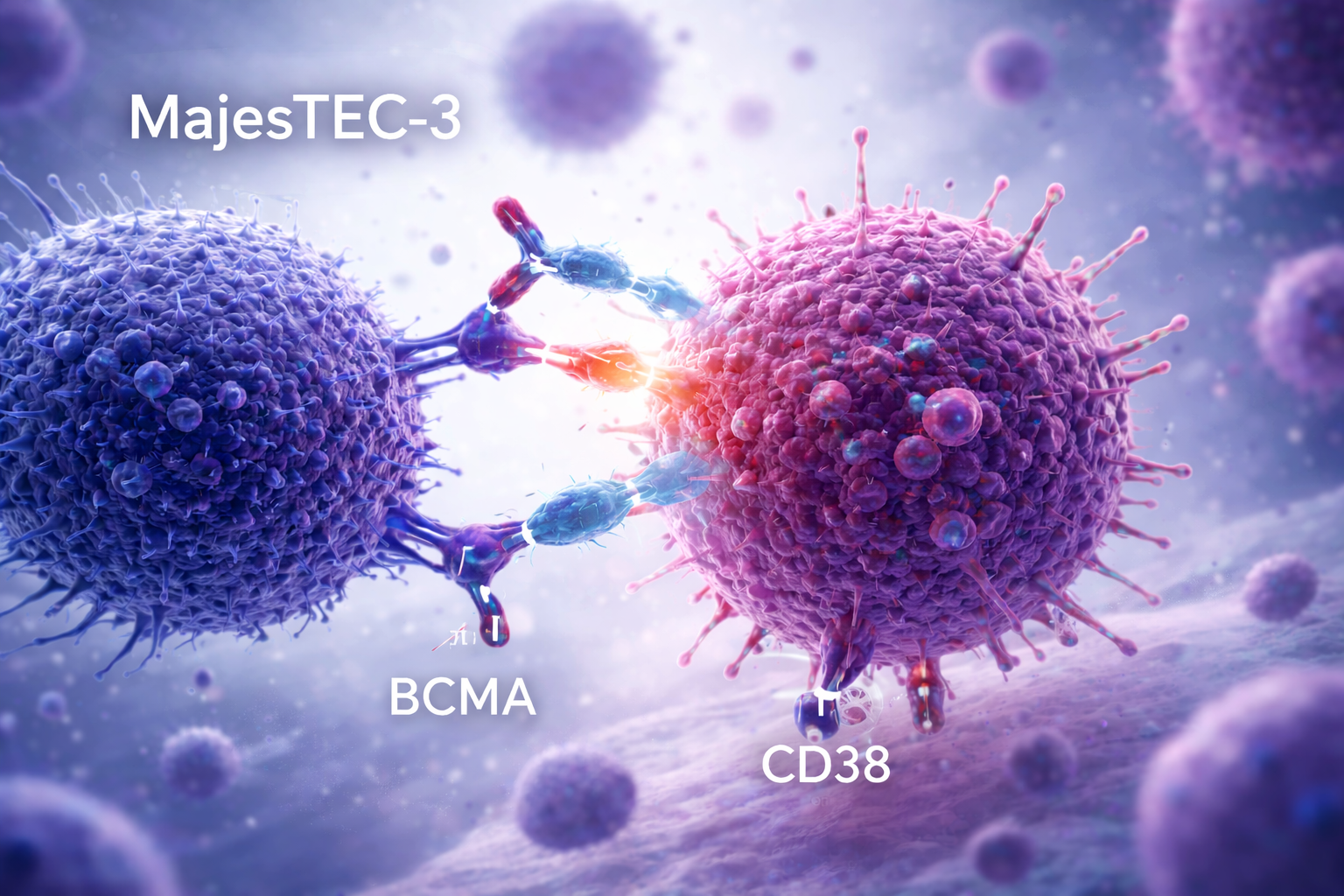
Concomitantly, Dr. Keith Flaherty, President-Elect of AACR and Director of Clinical Cancer Research at Mass General Cancer Center, believes that precision oncology is entering an advanced chemical and computational phase; He predicts that novel molecular tools (e.g., chemical inducers of proximity such as PROTACs, bispecifics, and molecular glues) will redefine drug design by modulating protein interactions rather than simply inhibiting targets.1 Early groundwork presented at the AACR-NCI-EORTC International Conference on Molecular Targets supports the feasibility of these approaches in previously intractable settings, including KRAS G12D–mutant pancreatic cancer and advanced gastroesophageal malignancies.1

The fact is, precision oncology itself is evolving; A once DNA-centric discipline has shifted to a multimodal analytic framework that integrates RNA, proteomics, multiplex immunofluorescence, radiographic data, and clinical variables.1 Flaherty argued that these multimodal models can subdivide historically monolithic diseases, like pancreatic cancer, glioblastoma, and sarcomas, into actionable biological niches.1 The most immediate clinical impact will likely come from improved detection of microscopic residual disease (MRD), particularly through circulating tumor DNA assays that guide adjuvant therapy escalation or de-escalation before radiographic relapse.1 Evidence is also expected to accumulate for next-generation RAS inhibitors beyond KRAS G12C, even if regulatory approvals lag.1
Advances in Cancer Immunotherapies
Much like the anticipatory shifts in cancer prevention and intervention, advances in research are already driving changes in immunotherapeutic approaches; Dr. Nina Bhardwaj, Director of Immunotherapy at Icahn School of Medicine at Mount Sinai, described how immunotherapy practices are shifting from brute cytotoxicity to engineered adaptability.1 Newly designed next-generation cellular therapies can persist, traffic, and function within hostile tumor microenvironments through cytokine-secreting “armored” constructs and modular receptor systems that incorporate logic-gated signaling and payload delivery.1 Investigations highlighted at the AACR Immuno-Oncology Conference, and in recent literature, described synthetic circuits and nanotechnology-enabled in vivo engineering approaches to overcome immunosuppression and functional exhaustion.1,2 Dr. Bhardwaj has already seen firsthand how T cells armored with IL-18 have performed better than their nonarmored counterparts in lymphoma.1,3

In parallel, vaccine development is broadening antigenic targets beyond classical neoantigens to include products of alternate reading frames, splicing variants, and untranslated regions (i.e., so-called dark-matter antigens), supporting both individualized and off-the-shelf platforms.1 “We’re realizing that there really is a wealth of tumor-associated and tumor-specific antigens that we’re continuing to discover…” Dr. Bhardwaj explained.1 She has already seen how RNA vaccine platforms that are successful in the infectious disease field, along with lipoplex delivery approaches, have demonstrated promise in melanoma and pancreatic cancer, especially when co-packaged with targeted immune modulators for tissue-specific release.1,4 Disease-specific advances further exemplify this trajectory: T-cell receptor therapies targeting gp100/CD3 with approval of tebentafusp (Kimmtrak) in uveal melanoma, TCR-directed approaches in synovial sarcoma, and emerging B7H3-targeted strategies in prostate cancer investigated through datasets from the Caris Precision Oncology Alliance.1 Dr. Bhardwaj characterizes these developments as multipronged and biology-matched rather than monolithic interventions.1
Advances in Cancer-Related AI
Many advances compete for attention in cancer medicine, yet entering 2026, only one is commanding both optimism and interrogation across tumor boards and conferences alike: AI. Dr. Dana Pe’er, Chair of Computational and Systems Biology at the Sloan Kettering Institute, believes that AI is poised to function as an infrastructural catalyst across oncology research and the clinic.1 At the bench, advances in protein-structure prediction have already reshaped molecular drug-design pipelines, enabling combinatorial exploration of candidate compounds with unprecedented speed and precision.1 In clinical research, AI is expected to optimize trial enrollment by algorithmically matching patients to studies across vast eligibility datasets that exceed human cognitive capacity.1 In the clinic, machine-learning models capable of analyzing gigapixel slide images can detect multiscale spatial patterns inaccessible to visual inspection; an example presented at the San Antonio Breast Cancer Symposium demonstrated superior five-year recurrence prediction compared to an established risk score when clinical, histologic, and genomic data were integrated.1,5,6

Dr. Pe’er believes that AI’s biggest impact will be on pathological diagnostics; she stated that “AI models built for digital image processing can read clinical slides much better than a human… Our minds have not evolved to look at these histopathological image slides which consist of billions of pixels—AI is really good at finding new patterns and reason at multiple scales, making it perfect for this use case”.1 She emphasized, however, that such tools are augmentative rather than substitutive; they excel at pattern recognition in common scenarios, but clinicians remain indispensable for rare or atypical cases.1 She also highlights the potential of cross-tumor pattern analysis to enable drug repurposing across histologies sharing microenvironmental similarities, though funding limitations and industry misalignment currently constrain this approach.1 Responsible data governance, transparency, and equitable access are essential prerequisites for widespread adoption.1
Advances in Cancer Equity and Public Engagement
Equity remains the decisive determinant of whether scientific advances translate into population benefit, according to Dr. Marcia Cruz‑Correa, Chief Medical Officer of PanOncology Trials.1 She expects measurable progress in screening uptake through less invasive modalities, particularly stool- and blood-based colorectal cancer tests designed to overcome barriers associated with colonoscopy access.1 Mobile low-dose CT screening units illustrate how logistical innovation can expand early lung-cancer detection in underserved communities.1 Broader adoption of germline genetic testing, tele-oncology, and community-based trial sites could improve both therapeutic access and representativeness of evidence, addressing the current reality that only about 5–7% of patients participate in clinical trials.1

Regulatory agencies such as the U.S. Food and Drug Administration and funding bodies can expedite this shift by incentivizing inclusive trial design and decentralization.1 Dr. Cruz-Correa also underscores metabolic health as a central oncologic priority: obesity, linked to thirteen malignancies and responsible for an estimated 7.6% of cancers, should be managed as a chronic disease through structured lifestyle programs and pharmacologic therapies, including GLP-1– and GLP-2–based agents.1 Integration of metabolic management into cancer prevention and survivorship care represents, in her view, a policy-aligned opportunity analogous to historic tobacco-control successes.1
Collectively, these expert perspectives converge on a singular forecast: the defining progress of 2026 will not be a single transformative therapy but rather the coordinated integration of earlier detection, biologically precise intervention, engineered immunologic strategies, computational augmentation, and equitable delivery systems. The strategy includes intervening earlier, deciding faster, and deploying therapies more intelligently while ensuring that innovations reach diverse patient populations.
Sources
- Quinn, Emma. “Experts Forecast Cancer Research and Treatment Advances in 2026.” American Association for Cancer Research (AACR), 8 Jan. 2026, www.aacr.org/blog/2026/01/08/experts-forecast-cancer-research-and-treatment-advances-in-2026/. Accessed 17 Feb. 2026.
- Zuo, Maocheng, et al. “Nano-/Nanobio-Technology-Enhanced CAR-T Cell Therapy: Engineering the next Generation of Immunotherapies.” Coordination Chemistry Reviews, vol. 550, 30 Nov. 2025, p. 217388, www.sciencedirect.com/science/article/abs/pii/S0010854525009580, https://doi.org/10.1016/j.ccr.2025.217388. Accessed 17 Feb. 2026.
- Dolgin, Elie. “Cytokine “Armor” Offers CAR T Cells a Second Chance.” Cancer Discovery, 1 Jan. 2024, aacrjournals.org/cdnews/news/1526/Cytokine-Armor-Offers-CAR-T-Cells-a-Second-Chance, https://doi.org/10.1158/2159-8290.cd-nw2024-0040. Accessed 20 Feb. 2026.
- Haghmorad, Dariush, et al. “MRNA Vaccine Platforms: Linking Infectious Disease Prevention and Cancer Immunotherapy.” Frontiers in Bioengineering and Biotechnology, vol. 13, 12 Mar. 2025, https://doi.org/10.3389/fbioe.2025.1547025. Accessed 27 Mar. 2025.
- “Poster Spotlight 11: Applying AI to Pathology and Risk Stratification – San Antonio Breast Cancer Symposium.” San Antonio Breast Cancer Symposium – the San Antonio Breast Cancer Symposium® Is Designed to Provide State-of-The-Art Information on the Experimental Biology, Etiology, Prevention, Diagnosis, and Therapy of Breast Cancer and Premalignant Breast Disease to an International Audience of Academic and Private Physicians and Researchers., 8 Oct. 2025, sabcs.org/events/2025/poster-spotlight-11-applying-ai-to-pathology-and-risk-stratification/. Accessed 23 Feb. 2026.
- Blazier, Danielle. “Can Multimodal AI Be Trusted in the Clinic? New SABCS 2025 Data Support Its Role in Personalized Breast Cancer Care – Oncologynexus.com.” Oncologynexus.com, 27 Jan. 2026, oncologynexus.com/can-multimodal-ai-be-trusted-in-the-clinic-new-sabcs-2025-data-support-its-role-in-personalized-breast-cancer-care/. Accessed 23 Feb. 2026.