
Urothelial Carcinoma

Atezolizumab Approved for Adjuvant Use in MRD Positive Muscle Invasive Bladder Cancer

Atezolizumab (Tecentriq) and Tecentriq Hybreza have been FDA approved as the first ctDNA-guided adjuvant immunotherapy options for patients with MIBC following cystectomy. Using Natera’s Signatera CDx companion diagnostic to identify MRD, the Phase 3...
Read More
Atezolizumab Approved for Adjuvant Use in MRD Positive Muscle Invasive Bladder Cancer

Latest News

AUA 2026 Preview: Key Trials and Emerging Strategies in NMIBC

AUA 2026 Preview: Key Trials and Emerging Strategies in NMIBC

Dr. Katie Murray previews the most anticipated updates in non muscle invasive bladder cancer ahead of the American Urological Association Annual Meeting 2026. She highlights phase 3 trials including POTOMAC and pembrolizumab plus BCG, emphasizing the growing role of combination immunotherapy and the importance of safety in early stage disease. The discussion also covers emerging […]


Read More
AUA 2026 MIBC Preview: Improving Recovery and Outcomes After Radical Cystectomy

AUA 2026 MIBC Preview: Improving Recovery and Outcomes After Radical Cystectomy

Dr. Katie Murray highlights key muscle invasive bladder cancer updates ahead of the American Urological Association Annual Meeting 2026, with a focus on postoperative recovery after radical cystectomy. Dr. Murray discusses trials like GI-COFFEE, exploring simple interventions to reduce ileus, and TIDE, which evaluates home IV fluid strategies to decrease dehydration and readmissions. While systemic […]

Read More
FDA Label Update Enables Accelerated Thawing of Nadofaragene Firadenovec in BCG-Unresponsive NMIBC

FDA Label Update Enables Accelerated Thawing of Nadofaragene Firadenovec in BCG-Unresponsive NMIBC

The management of high-risk, bacillus Calmette-Guérin (BCG)–unresponsive non–muscle invasive bladder cancer (NMIBC) continues to evolve with the integration of novel intravesical therapies, including gene-based approaches. The U.S. Food and Drug Administration (FDA) has approved a label update for nadofaragene firadenovec-vncg (Adstiladrin), introducing an accelerated thawing protocol, allowing thawing in approximately 25 minutes at 25 °C. […]

Read More
FGFR3-Targeted Therapy in Intermediate-Risk NMIBC

FGFR3-Targeted Therapy in Intermediate-Risk NMIBC

Dr. Katie Murray and Dr. Erik Goluboff explore the emerging role of FGFR3-targeted therapy in intermediate-risk non–muscle invasive bladder cancer, highlighting the high prevalence of FGFR3 mutations in this population and the potential for more precise, less invasive treatment. Early data with selective FGFR3 inhibition suggest promising response rates with a more favorable safety profile […]

Read More
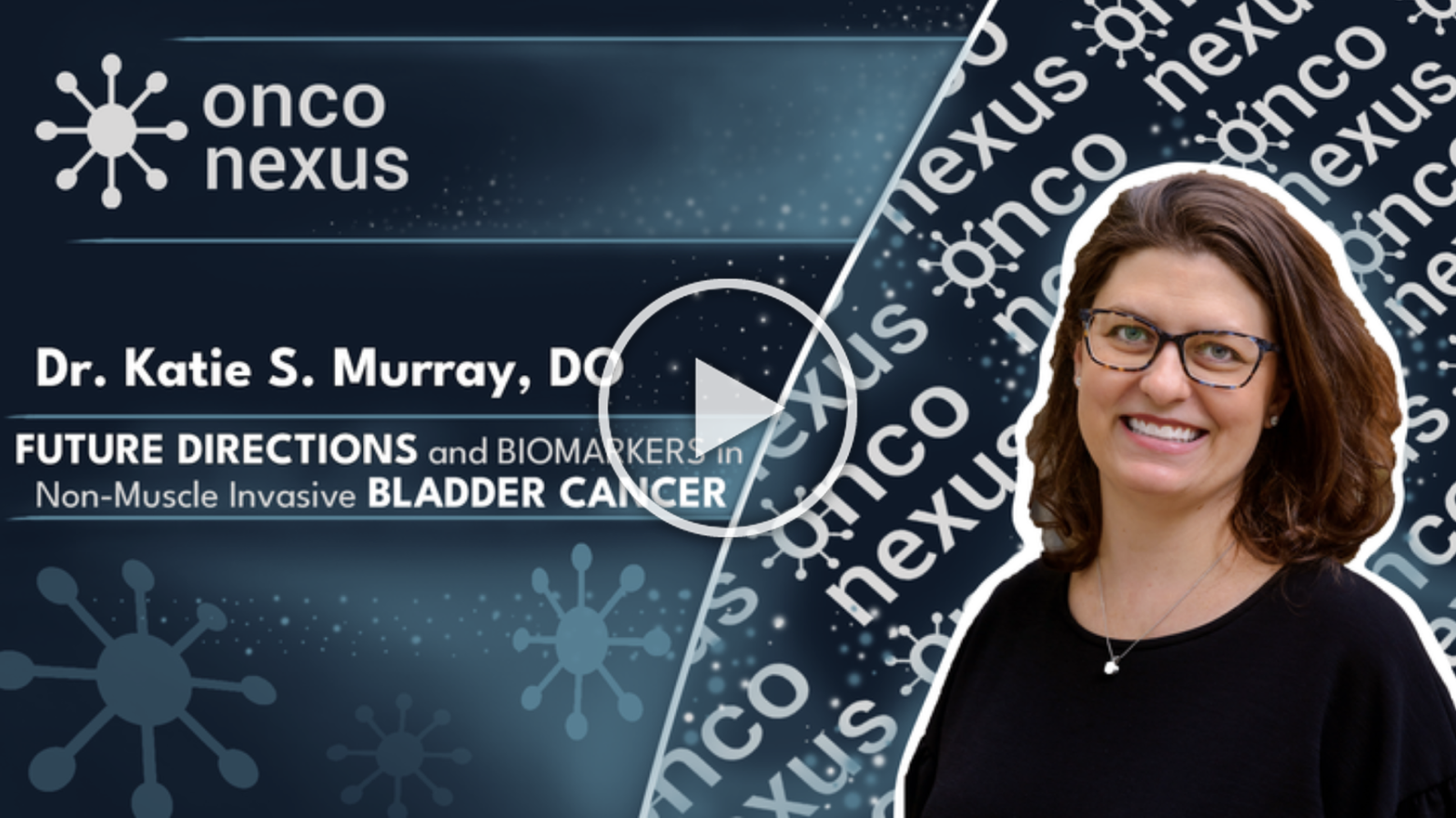
Future Directions and Biomarkers in Non–Muscle Invasive Bladder Cancer

Future Directions and Biomarkers in Non–Muscle Invasive Bladder Cancer

Dr. Katie Murray discusses emerging strategies for non–muscle invasive bladder cancer, particularly in the BCG-naive and high-risk settings. Ongoing trials are exploring combinations of BCG with immunotherapy, alternatives like gemcitabine and docetaxel, and new FDA-approved agents to expand frontline options. Biomarkers, including computational histology (CHAI), may help predict patient response to specific therapies and guide […]

Read More
ZUSDURI (Mitomycin) Demonstrates Sustained Efficacy Across EORTC Risk Groups in Recurrent NMIBC

ZUSDURI (Mitomycin) Demonstrates Sustained Efficacy Across EORTC Risk Groups in Recurrent NMIBC

ZUSDURI (mitomycin) delivers durable tumor control in recurrent low‑grade, intermediate‑risk NMIBC, with 79.6% complete responses at three months and 72.2% event-free survival at 24 months. Effective across all EORTC risk groups, it offers a promising option for bladder preservation and long-term disease management.

Read More
Collaborating to Deliver New NMIBC Therapies

Collaborating to Deliver New NMIBC Therapies

Dr. Katie Murray and oncology nurse practitioner Laura Bauer discuss the practical challenges of delivering new FDA-approved therapies for non–muscle invasive bladder cancer and why strong collaboration between urology and medical oncology is essential. They highlight strategies to prevent patients from being lost to follow-up, coordinate cystoscopy surveillance, manage expensive drug preparation, and ensure smooth […]

Read More
Inside a Modern NMIBC Program: Urology and Oncology Collaboration

Inside a Modern NMIBC Program: Urology and Oncology Collaboration

Dr. Katie Murray and GU oncology nurse practitioner Laura Bauer discuss how multidisciplinary collaboration is becoming increasingly important in managing non–muscle invasive bladder cancer. They highlight how integrating medical oncology teams helps manage intravesical therapies, coordinate treatment logistics, and expand access to newer agents such as gemcitabine/docetaxel, nadofaragene firadenovec, N-803, and mitomycin hydrogel. As treatment […]

Read More