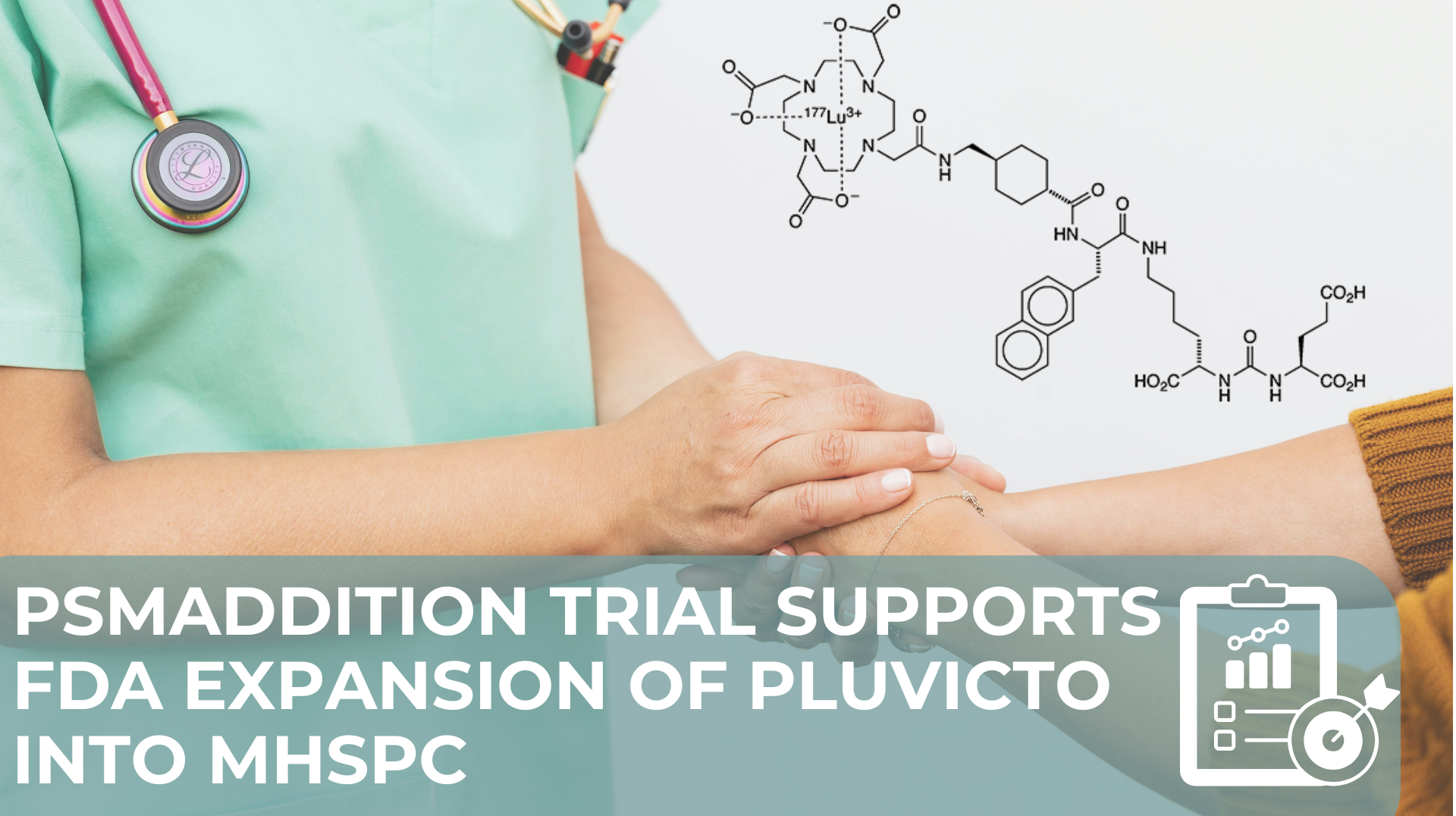
The US Food and Drug Administration (FDA) has approved an expanded indication for Pluvicto (lutetium Lu 177 vipivotide tetraxetan), extending its use into an earlier disease setting. The agent, developed by Novartis, is now approved in combination with an androgen receptor pathway inhibitor (ARPI) for patients with prostate-specific membrane antigen (PSMA)-positive metastatic hormone-sensitive prostate cancer (mHSPC) — also referred to as metastatic androgen pathway modulation-naive/sensitive (mAPMN/S) prostate cancer. The approval marks a significant expansion of radioligand therapy into the hormone-sensitive setting, supported by data from the pivotal Phase III PSMAddition trial.
Clinical Takeaway
The FDA approval of Pluvicto in combination with an ARPI for PSMA-positive mHSPC represents the first radioligand therapy approval in the hormone-sensitive prostate cancer setting.1 The PSMAddition trial demonstrated a statistically significant reduction in the risk of progression or death, with an evolving overall survival signal as data continue to mature.1
Drug Profile & Mechanism1,2
- Drug name: Pluvicto (lutetium Lu 177 vipivotide tetraxetan)
- Drug class: Radioligand therapy (RLT)
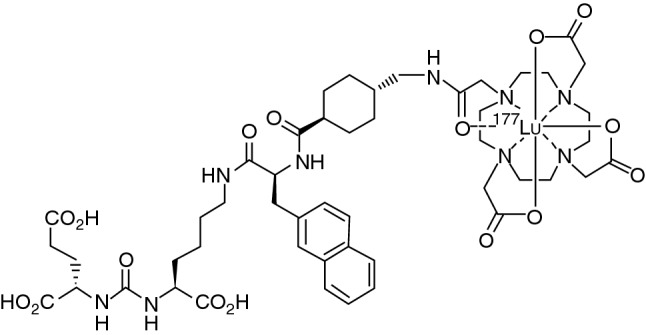
- Mechanism: Pluvicto targets PSMA, a protein overexpressed on prostate cancer cells. The lutetium-177 radionuclide delivers targeted beta-particle radiation directly to PSMA-expressing tumor cells, inducing DNA damage and cell death while limiting exposure to surrounding normal tissue.
- Developer: Novartis
- New combination partner: Androgen receptor pathway inhibitor (ARPI) plus androgen deprivation therapy (ADT) as standard of care (SoC)
Target Population1,3
- Indication: PSMA-positive metastatic hormone-sensitive prostate cancer (mHSPC), also designated as metastatic androgen pathway modulation-naive/sensitive (mAPMN/S) prostate cancer
- Biomarker requirement: Patients must have PSMA-positive disease
- Treatment context: Used in combination with an ARPI (plus ADT as the backbone of standard of care) — this is an earlier-line setting than Pluvicto’s prior approval in PSMA-positive mCRPC
Study Design: PSMAddition Trial (NCT04720157)1,3
- Trial name: PSMAddition (NCT04720157)
- Phase: Phase III
- Design: Randomized controlled trial evaluating Pluvicto plus standard of care (ARPI + ADT) versus standard of care alone in patients with PSMA-positive mHSPC
- Basis for approval: The trial provided the pivotal evidence supporting the FDA’s expanded approval decision
Efficacy Outcomes1,3
- Primary analysis — progression-free survival (PFS):
- Pluvicto + SoC reduced the risk of progression or death by 28% versus SoC alone (HR 0.72; 95% CI: 0.58–0.90)
- Updated analysis — PFS:
- At a subsequent updated analysis, the risk of progression or death was further reduced by 33% (HR 0.67; 95% CI: 0.55–0.82), reflecting deepening benefit with continued follow-up
- Overall survival (OS) — updated analysis:
- A positive OS trend favoring Pluvicto plus SoC was observed (HR 0.80; 95% CI: 0.63–1.01)
- Data continue to mature ahead of the final OS analysis; the confidence interval currently crosses 1.0, indicating the OS result is not yet formally statistically significant
Key Clinical Implications
✔ Pluvicto becomes the first RLT approved for use in the hormone-sensitive prostate cancer setting, representing a meaningful shift in how RLT may be integrated into the treatment continuum.
✔ PSMA imaging will be required before treatment to confirm PSMA-positive disease status, reinforcing the need for appropriate patient selection using validated PSMA-targeted diagnostic imaging.
✔ The combination of Pluvicto with an ARPI plus ADT offers a new intensification strategy for eligible patients with mHSPC, adding to an already evolving landscape that includes ARPI-based doublet and chemohormonal triplet regimens.
✔ An emerging overall survival benefit warrants continued monitoring; the final OS analysis from PSMAddition will be critical in further defining the long-term impact of this combination in the mHSPC setting.
✔ Clinicians should consider the logistical and multidisciplinary requirements of radioligand therapy delivery, including access to nuclear medicine infrastructure and radiation safety protocols, when incorporating Pluvicto into mHSPC treatment planning.
Bottom Line
The FDA’s expanded approval of Pluvicto (lutetium Lu 177 vipivotide tetraxetan) in combination with an ARPI for PSMA-positive mHSPC marks a pivotal step forward in prostate cancer therapeutics, bringing radioligand therapy into an earlier and more broadly applicable disease setting for the first time. Supported by statistically significant PFS data from the PSMAddition Phase III trial — with a 33% reduction in the risk of progression or death at the updated analysis — and an encouraging overall survival trend, this approval expands the therapeutic toolkit available to oncologists managing hormone-sensitive metastatic disease. Final OS data from PSMAddition will be closely watched to confirm the full magnitude of benefit in this patient population.
Sources:
- The Pharma Letter. FDA approves expanded indication for Pluvicto. The Pharma Letter. Published July 31, 2026. Accessed August 3, 2026. https://www.thepharmaletter.com/fda-approves-expanded-indication-for-pluvicto
- Sartor O, de Bono J, Chi KN, et al; VISION Investigators. Lutetium-177–PSMA-617 for metastatic castration-resistant prostate cancer. N Engl J Med. 2021;385(12):1091-1103. doi:10.1056/NEJMoa2107322
- US Food and Drug Administration. FDA approves lutetium Lu 177 vipivotide tetraxetan with androgen receptor pathway inhibitor therapy. Published August 1, 2026. Accessed August 3, 2026. https://www.fda.gov/drugs/resources-information-approved-drugs/fda-approves-lutetium-lu-177-vipivotide-tetraxetan-androgen-receptor-pathway-inhibitor-therapy