The U.S. Food and Drug Administration (FDA) has granted Fast Track designation to spevatamig, a first-in-class anti-CLDN18.2/CD47 bispecific antibody, for the treatment of patients with advanced and metastatic biliary tract carcinoma (BTC). Developed by Phanes Therapeutics, spevatamig represents an emerging class of immuno-oncology agents known as innate immunity enhancers (I²Es), and is now in active Phase 2 investigation across multiple gastrointestinal malignancies.
Clinical Takeaway
✔ Spevatamig has received FDA Fast Track designation for advanced and metastatic biliary tract carcinoma, underscoring the significant unmet need in this difficult-to-treat malignancy and the potential of innate immune activation as a therapeutic strategy.
✔ This is the second Fast Track designation for spevatamig, following a 2024 designation for metastatic claudin 18.2-positive pancreatic adenocarcinoma, reflecting growing regulatory recognition of the molecule across GI oncology.
✔ Phanes has expanded its clinical collaboration with Merck to evaluate spevatamig in combination with pembrolizumab for frontline treatment of BTC, leveraging innate and adaptive immune mechanisms.
Drug Profile & Mechanism
- Drug name: Spevatamig
- Drug class: First-in-class native IgG-like bispecific antibody (bsAb); innate immunity enhancer (I²E)
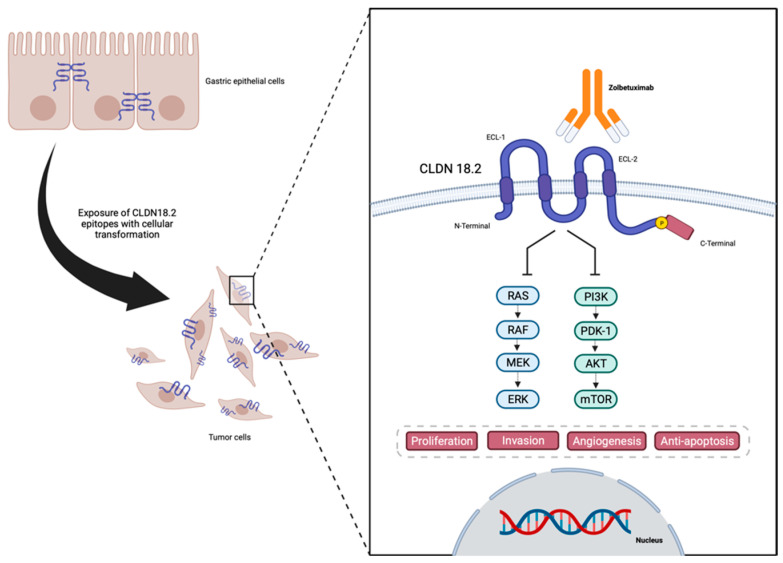
- Targets: Claudin 18.2 (CLDN18.2) and CD47
- Mechanism of action:
- Simultaneously binds CLDN18.2, a tight junction protein overexpressed on GI tumor cells, and CD47, a “don’t eat me” signal that enables tumors to evade innate immune surveillance
- Blocking CD47 while targeting CLDN18.2 activates macrophages and dendritic cells to recognize and destroy cancer cells
- This innate immune mechanism is considered complementary to immune checkpoint inhibitors (ICIs) and may be particularly relevant for “cold tumors” with low immune infiltration that are less likely to respond to ICIs alone
- Developer: Phanes Therapeutics, Inc. (San Diego, CA)
Target Population
- Patients with advanced and metastatic biliary tract carcinoma (BTC), an indication with significant unmet need and limited effective treatment options beyond first-line chemotherapy
- Spevatamig is also under investigation in patients with metastatic claudin 18.2-positive pancreatic ductal adenocarcinoma (PDAC) in the first-line setting
- The drug is being studied across multiple GI cancer indications given the prevalence of CLDN18.2 expression in GI tumors
Development & Regulatory History
- 2022: FDA granted Orphan Drug Designation (ODD) for spevatamig in metastatic pancreatic cancer
- 2023: Phanes entered into a clinical collaboration agreement with Merck (known as MSD outside the U.S. and Canada) to evaluate spevatamig in combination with pembrolizumab (Keytruda®)
- 2024: FDA granted Fast Track designation for spevatamig in metastatic claudin 18.2-positive pancreatic adenocarcinoma
- 2026 (August): FDA granted Fast Track designation for spevatamig in advanced and metastatic biliary tract carcinoma
- Phanes has recently expanded its clinical collaboration with Merck to study spevatamig plus pembrolizumab specifically for the frontline (1L) treatment of BTC
Current Clinical Program
- Phanes is currently conducting three Phase 2 clinical trials across its pipeline, including spevatamig, peluntamig, and mavrostobart
- Spevatamig in PDAC: A Phase 2 study evaluating spevatamig in combination with chemotherapy for frontline treatment of metastatic PDAC has completed enrollment, per a company announcement in August 2026
- Spevatamig in BTC: A Phase 2 study in biliary tract cancer is actively progressing; the combination arm with pembrolizumab targeting the frontline BTC setting reflects an expanded collaboration with Merck
- Spevatamig has the potential to become the first I²E approved for a solid tumor indication and is designed to be combinable with a range of anti-cancer therapies, including chemotherapy and ICIs
Key Clinical Implications
✔ Biliary tract cancer remains a high-unmet-need malignancy with limited treatment options following first-line therapy. The FDA Fast Track designation for spevatamig signals regulatory acknowledgment of the need for novel, mechanism-differentiated agents in this space.
✔ The I²E mechanism represents a conceptually distinct approach to immuno-oncology: rather than reinvigorating exhausted T cells as ICIs do, spevatamig aims to activate innate immune effectors — macrophages and dendritic cells — which may broaden the population of patients who benefit from immunotherapy.
✔ The combination of spevatamig with pembrolizumab in BTC reflects a rational strategy to engage both innate and adaptive arms of the immune system simultaneously, with the potential for synergistic anti-tumor activity in a disease where checkpoint inhibition alone has shown modest benefit.
✔ CLDN18.2 is emerging as a clinically actionable target in GI oncology, with expression documented in gastric, pancreatic, and biliary tract cancers. Spevatamig’s bispecific design adds the CD47-blockade dimension to CLDN18.2 targeting, potentially enhancing tumor cell clearance beyond what monospecific CLDN18.2 antibodies can achieve.
✔ Oncologists managing patients with advanced BTC or PDAC should monitor upcoming Phase 2 data from spevatamig trials, as enrollment completion in the PDAC study suggests efficacy and safety readouts may be forthcoming.
Bottom Line
The FDA’s Fast Track designation for spevatamig in advanced and metastatic biliary tract carcinoma marks a meaningful regulatory milestone for this first-in-class CLDN18.2/CD47 bispecific innate immunity enhancer. With an active Phase 2 program spanning BTC and PDAC, an expanded collaboration with Merck for the pembrolizumab combination, and a completed enrollment milestone in its PDAC trial, spevatamig is advancing as a potentially differentiated immunotherapy platform in GI oncology. If clinical outcomes confirm its preclinical rationale, spevatamig could represent the first I²E to reach approval in a solid tumor — and a meaningful new option for patients with biliary tract cancer who have few alternatives.
Sources:
- Phanes Therapeutics, Inc. (2026, August 14). Phanes Therapeutics Receives FDA Fast Track Designation for Spevatamig in Advanced and Metastatic Biliary Tract Carcinoma. PR Newswire. https://www.prnewswire.com/news-releases/phanes-therapeutics-receives-fda-fast-track-designation-for-spevatamig-in-advanced-and-metastatic-biliary-tract-carcinoma-302851460.html