

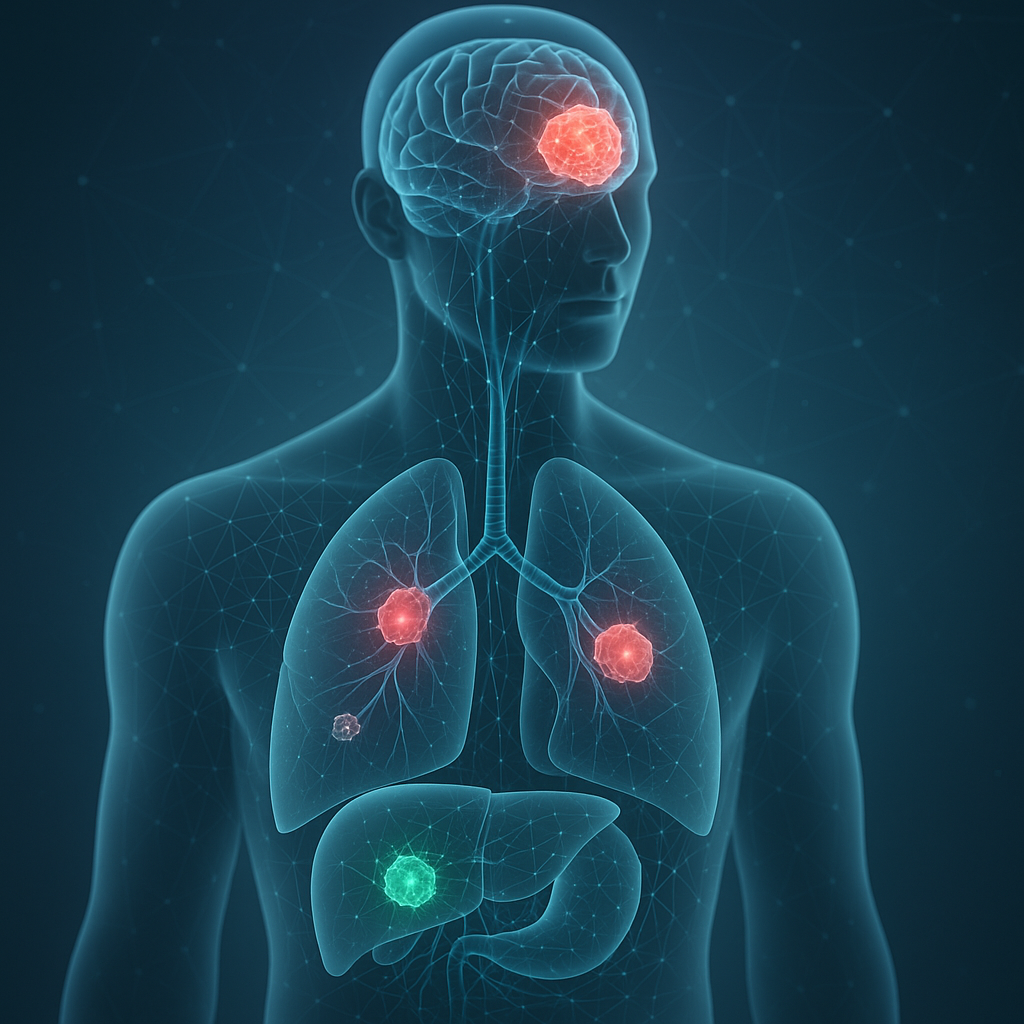

MSK is using advanced AI models developed in-house to improve radiation therapy precision across more than 40 tissue types, enabling automated organ contouring, three-dimensional tumor volume tracking, and real-time treatment optimization—innovations now guiding hundreds of daily radiotherapy treatments at the institution.
Technology Development & Implementation:
- Harini Veeraraghavan, PhD, associate attending computer scientist in MSK’s Department of Medical Physics, leads multidisciplinary development of AI models that account for natural organ movement and shape changes during radiation therapy
- AI-assisted contouring technology reduces physician workload from hours of manual organ tracing to minutes of refinement, providing consistent baseline contours across eyes, nose, teeth, salivary glands, and other structures
- Deep learning models overcome day-to-day anatomical variability that can cause radiation dose inconsistencies, with technology currently applied across head and neck, lung, pancreatic, liver, and prostate cancers
- MSK is developing a “digital virtual twin” approach to model abdominal organ movement and predict optimal radiation delivery, accounting for breathing, digestive contractions, and fluid dynamics
Clinical Applications & Innovations:
- AI-driven three-dimensional tumor volumetric analysis replaces traditional RECIST (Response Evaluation Criteria in Solid Tumors) two-dimensional measurements, enabling more robust tracking of multiple tumors simultaneously
- Novel AI models allow measurement of tumor hypoxia changes using standard PET scans rather than specialized FMISO PET scans, providing early warnings when tumors become therapy-resistant
- Treatment optimization occurs within weeks or days rather than months, allowing physicians to maintain effective therapies or switch to alternatives before significant disease progression
- Dose de-escalation protocols leverage AI-detected tumor responses to reduce radiation exposure and associated side effects in well-responding patients
Research Funding & Development Status:
- Dr. Veeraraghavan awarded two R01 research grants totaling more than $4 million from the National Cancer Institute and National Institute of Biomedical Imaging and Bioengineering
- First grant focuses on developing AI tools for lung cancer treatment with reduced radiation toxicity and improved targeting of difficult-to-treat tumor locations
- Second grant, co-led by MSK associate attending physicist Neelam Tyagi, PhD, develops digital virtual twin modeling for abdominal organs and radiation dose quantification
- Multidisciplinary team includes radiation oncologists Nancy Lee, MD (Chief of Head and Neck Radiation Oncology), Puneeth Iyengar, MD, PhD, Daniel Gomez, Helena Yu, Luke Pike, and physicist Joseph Deasy, PhD (Chair of Medical Physics)
Practice Implications & Future Directions:
- AI-enhanced radiation therapy currently used at MSK for head and neck, lung, brain, and metastatic cancers, with prostate cancer evaluation underway in partnership with other institutions
- Technology provides unprecedented precision, consistency, and efficiency compared to traditional manual contouring methods that show inter-physician variability
- Real-time tumor response monitoring enables personalized treatment adjustments and adaptive radiation therapy protocols
- MSK’s sophisticated in-house AI models paired with expert clinical oversight establish institutional leadership in AI-assisted radiation oncology
Limitations & Considerations:
- Article represents institutional perspective without independent validation of AI model performance metrics or comparative outcomes data
- No specific accuracy rates, time savings quantification, or patient outcome improvements provided
- Technology implementation scope limited to MSK facilities; generalizability to other institutions and resource settings unclear
- Long-term follow-up data on AI-guided treatment outcomes compared to traditional approaches not yet available
Source: https://www.mskcc.org/news/how-msk-doctors-are-improving-radiation-treatments-with-ai