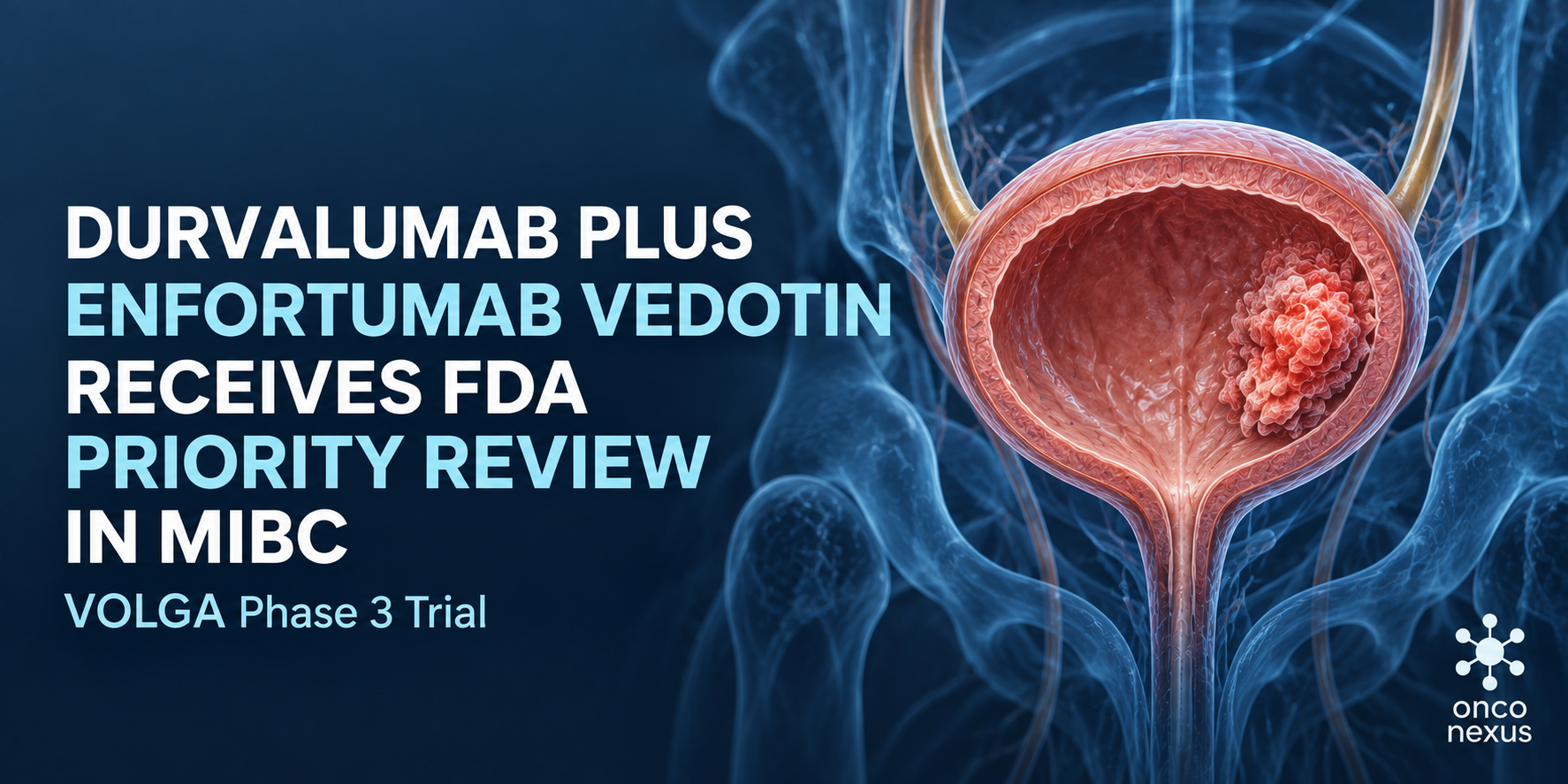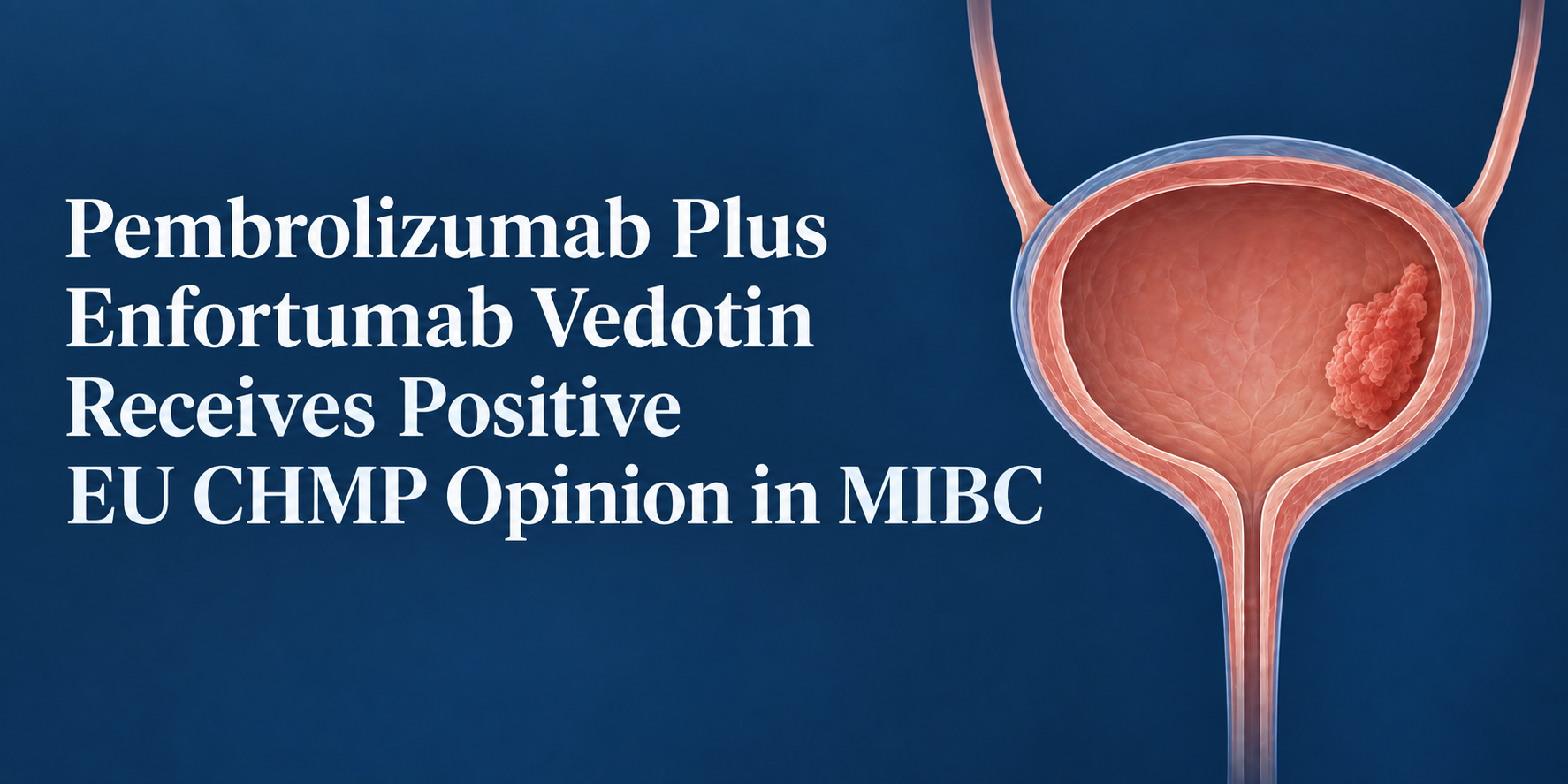
Merck announced on September 18, 2026, that the European Medicines Agency’s Committee for Medicinal Products for Human Use (CHMP) has adopted a positive opinion recommending approval of pembrolizumab (Keytruda) in combination with enfortumab vedotin (Padcev) as perioperative treatment for adults with resectable muscle-invasive bladder cancer (MIBC). The recommendation covers use as neoadjuvant treatment followed by continuation as adjuvant treatment after radical cystectomy, and applies regardless of cisplatin eligibility. The opinion also encompasses the subcutaneous formulation of pembrolizumab (Keytruda SC). A final decision by the European Commission is expected in the fourth quarter of 2026.
The positive opinion is based on results from the Phase 3 KEYNOTE-B15 trial (also known as EV-304), in which the combination demonstrated statistically significant improvements in event-free survival, overall survival, and pathologic complete response rate compared to neoadjuvant cisplatin-based chemotherapy and surgery in cisplatin-eligible patients with MIBC. If the European Commission grants marketing authorization, the regimen would become the first PD-1 inhibitor plus antibody-drug conjugate combination approved in the EU for MIBC patients regardless of cisplatin eligibility.
Key finding
In the KEYNOTE-B15 trial, perioperative pembrolizumab plus enfortumab vedotin reduced the risk of event-free survival events by 47% and the risk of death by 35% versus neoadjuvant cisplatin-based chemotherapy in cisplatin-eligible patients with resectable MIBC, though the CHMP opinion and any potential EU approval still awaits a final European Commission decision, expected by Q4 2026.
Study Design
| Trial | Phase 3 KEYNOTE-B15 (also known as EV-304); conducted in collaboration with Pfizer and Astellas |
|---|---|
| Population | Adults with resectable muscle-invasive bladder cancer eligible for cisplatin-based chemotherapy |
| Treatment | Pembrolizumab plus enfortumab vedotin as neoadjuvant treatment, continued as adjuvant treatment after radical cystectomy, versus neoadjuvant gemcitabine and cisplatin followed by surgery |
| Primary endpoint | Event-free survival (defined as disease progression, recurrence, or death) |
| Key secondary endpoints | Overall survival; pathologic complete response rate |
KEYNOTE-B15 enrolled 808 patients randomized to the pembrolizumab plus enfortumab vedotin perioperative regimen (n=405) or to neoadjuvant gemcitabine and cisplatin followed by surgery (n=403). The trial represents a perioperative strategy, combining both pre- and post-surgical treatment phases, distinguishing it from earlier studies that evaluated neoadjuvant chemotherapy alone.
Results and Safety
Pembrolizumab plus enfortumab vedotin demonstrated a statistically significant improvement in event-free survival, reducing the risk of disease progression, recurrence, or death by 47% compared to neoadjuvant chemotherapy (HR=0.53 [95% CI, 0.41–0.70]; p<0.0001). Event-free survival events occurred in 21% of patients in the combination arm (87/405) versus 36% in the chemotherapy arm (146/403).
The combination also produced a statistically significant improvement in overall survival, reducing the risk of death by 35% (HR=0.65 [95% CI, 0.48–0.89]; p=0.0029), with deaths occurring in 17% of combination-arm patients (69/405) versus 25% in the chemotherapy arm (99/403). The pathologic complete response rate was 55.8% (95% CI: 50.8–60.7) with pembrolizumab plus enfortumab vedotin compared to 32.5% (95% CI: 28.0–37.3) with neoadjuvant chemotherapy (p<0.0001).
Merck’s announcement did not include detailed safety data from KEYNOTE-B15 in this release; adverse event profiles and tolerability findings were not disclosed in the source material.
Clinical Context
MIBC carries a substantial recurrence burden: nearly half of patients who undergo the current standard of care (neoadjuvant cisplatin-based chemotherapy followed by radical cystectomy) experience disease recurrence. Adding to this challenge, up to half of patients with MIBC are not eligible to receive cisplatin and have historically faced limited systemic treatment options, often undergoing surgery alone. The CHMP opinion, if converted to EC approval, would extend access to a perioperative immunotherapy-ADC combination to both cisplatin-eligible and cisplatin-ineligible patients in the EU, building on a June 2026 EC approval of the same regimen specifically for cisplatin-ineligible patients based on the Phase 3 KEYNOTE-905 trial.
In July 2026, the U.S. FDA approved pembrolizumab plus enfortumab vedotin for the perioperative treatment of adults with MIBC regardless of cisplatin eligibility, also on the basis of KEYNOTE-B15 data, making the EU CHMP opinion a parallel regulatory milestone. How the combination will be positioned relative to existing neoadjuvant chemotherapy regimens in clinical practice, and whether long-term survival benefit will be maintained across cisplatin-ineligible subgroups in the EU label, remain questions that ongoing follow-up will need to address.
Sources
- Merck. “Merck Receives Positive EU CHMP Opinion for KEYTRUDA® (pembrolizumab) Plus Padcev® (enfortumab vedotin-ejfv) as Perioperative Treatment for Adults With Resectable Muscle-Invasive Bladder Cancer (MIBC).” Press release. September 18, 2026. View source.
AI disclosure: This article was prepared with assistance from generative AI using the source material cited above. It was reviewed and edited by Brandon Twyford before publication.