
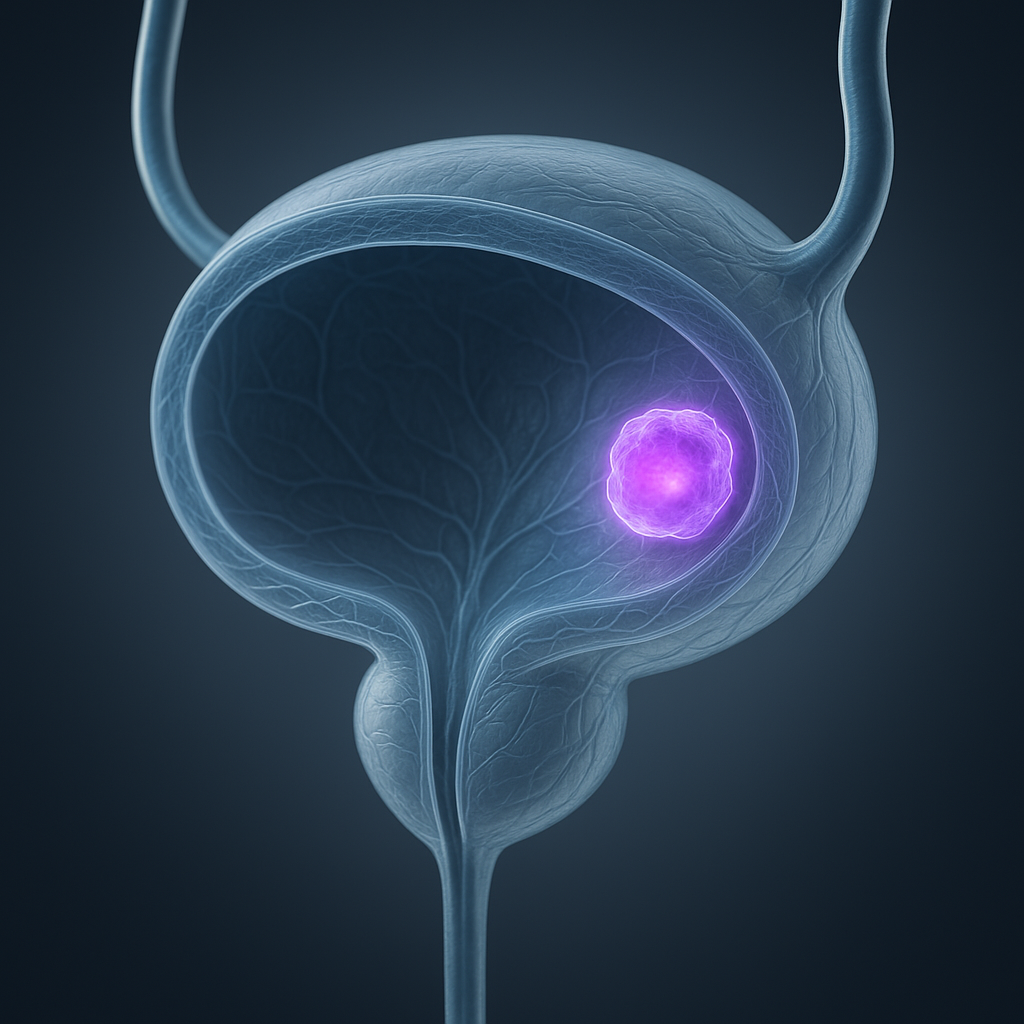
The pivotal Phase 3 CREST trial demonstrated that sasanlimab (an investigational anti-PD-1 monoclonal antibody) in combination with standard Bacillus Calmette-Guérin (BCG) induction and maintenance therapy significantly improved event-free survival in BCG-naïve, high-risk non-muscle invasive bladder cancer patients, showing a 32% reduction in risk of disease-related events compared to BCG alone. This represents the first potential treatment advancement for this patient population in over 30 years, with results shared with global health authorities to support regulatory filings. Notably, BCG maintenance was essential for benefit, as sasanlimab with BCG induction only (without maintenance) showed no improvement over standard therapy.
Study Design & Population
- Study Type: Phase 3, multinational, randomized, open-label, three parallel-arm trial (CREST, NCT04165317)
- Sample Size: 1,055 patients randomized across three arms (Arm A: n=352; Arm B: n=352; Arm C: n=351)
- Patient Population: BCG-naïve patients with high-risk non-muscle invasive bladder cancer (NMIBC)
- Treatment Arms:
- Arm A: Sasanlimab 300 mg subcutaneously every 4 weeks (up to cycle 25) + BCG induction (weekly for 6 weeks) + BCG maintenance
- Arm B: Sasanlimab 300 mg subcutaneously every 4 weeks (up to cycle 25) + BCG induction only (no maintenance)
- Arm C: BCG induction and maintenance alone (control arm)
- Primary Endpoint: Event-free survival (EFS) assessed by investigator, comparing Arm A versus Arm C
- EFS Definition: Composite endpoint measuring time from randomization to earliest occurrence of high-grade disease recurrence, disease progression, persistence of carcinoma in situ (CIS), or death from any cause
Key Findings
- Primary Endpoint Met: Sasanlimab + BCG (induction and maintenance) significantly improved EFS versus BCG alone: HR 0.68 (95% CI: 0.49-0.94; p=0.019), representing a 32% risk reduction; median EFS not yet reached
- 36-Month Event-Free Probability: 82.1% (95% CI: 77.4-85.9) with sasanlimab combination versus 74.8% (95% CI: 69.7-79.2) with BCG alone
- High-Risk Subgroups Showed Consistent Benefit:
- T1 disease: EFS HR 0.63 (95% CI: 0.41-0.96)
- CIS disease: EFS HR 0.53 (95% CI: 0.29-0.98)
- Importance of BCG Maintenance Confirmed: Sasanlimab + BCG induction only (Arm B) showed no EFS benefit versus BCG alone with maintenance: HR 1.16 (95% CI: 0.87-1.55; p=0.312)
- Complete Response in CIS Patients:
- CR rate: 89.8% with sasanlimab combination versus 85.2% with BCG alone
- Probability of remaining in CR at 36 months: 91.7% with sasanlimab combination versus 67.7% with BCG alone
- Overall Survival: Early interim analysis (median follow-up 40.9 months) showed no difference between treatment arms; study continues for final survival analysis
- Safety Profile: Overall safety of sasanlimab + BCG was generally consistent with known profiles of BCG and PD-1 inhibitors; no new safety signals identified
Clinical Implications
- Potential First Advancement in Three Decades: Sasanlimab combination represents the first immunotherapy to show significant benefit when added to BCG in BCG-naïve, high-risk NMIBC patients, addressing an unmet need in a population where 40-50% experience disease recurrence or progression despite BCG therapy
- Redefining Treatment Paradigm: Adding subcutaneous checkpoint inhibition earlier in disease course may establish new standard of care for approximately 38,000 U.S. patients with high-risk NMIBC
- BCG Maintenance Remains Critical: Results underscore that BCG maintenance must be included as part of both standard therapy and combination regimens; induction-only approaches are insufficient
- Durable Responses in CIS: Superior duration of complete response in CIS patients (91.7% vs 67.7% at 36 months) suggests sasanlimab combination may provide more sustained disease control
- Subcutaneous Administration Advantage: Once-every-four-weeks subcutaneous delivery offers potential convenience benefit over intravesical-only approaches
- Regulatory Path Forward: Data shared with global health authorities support potential regulatory filings for new treatment indication
Limitations
- Median EFS Not Reached: Limited follow-up prevents full assessment of long-term durability; continued monitoring needed to establish sustained benefit
- Overall Survival Data Immature: Early interim OS analysis shows no difference, but median 40.9-month follow-up may be insufficient; trial continues for final survival analysis
- Open-Label Design: Lack of blinding introduces potential bias in investigator-assessed endpoints, though objective measures (recurrence, progression) reduce this concern
- BCG Supply Considerations: Combination approach requires continued BCG availability, which has faced supply challenges; clinical implementation may be affected by BCG access issues
- Safety Follow-Up Duration: Long-term safety beyond cycle 25 (approximately 2 years) requires additional monitoring to fully characterize late immune-related adverse events
- Generalizability: Trial enrolled BCG-naïve patients; applicability to BCG-unresponsive or BCG-relapsed populations remains to be established