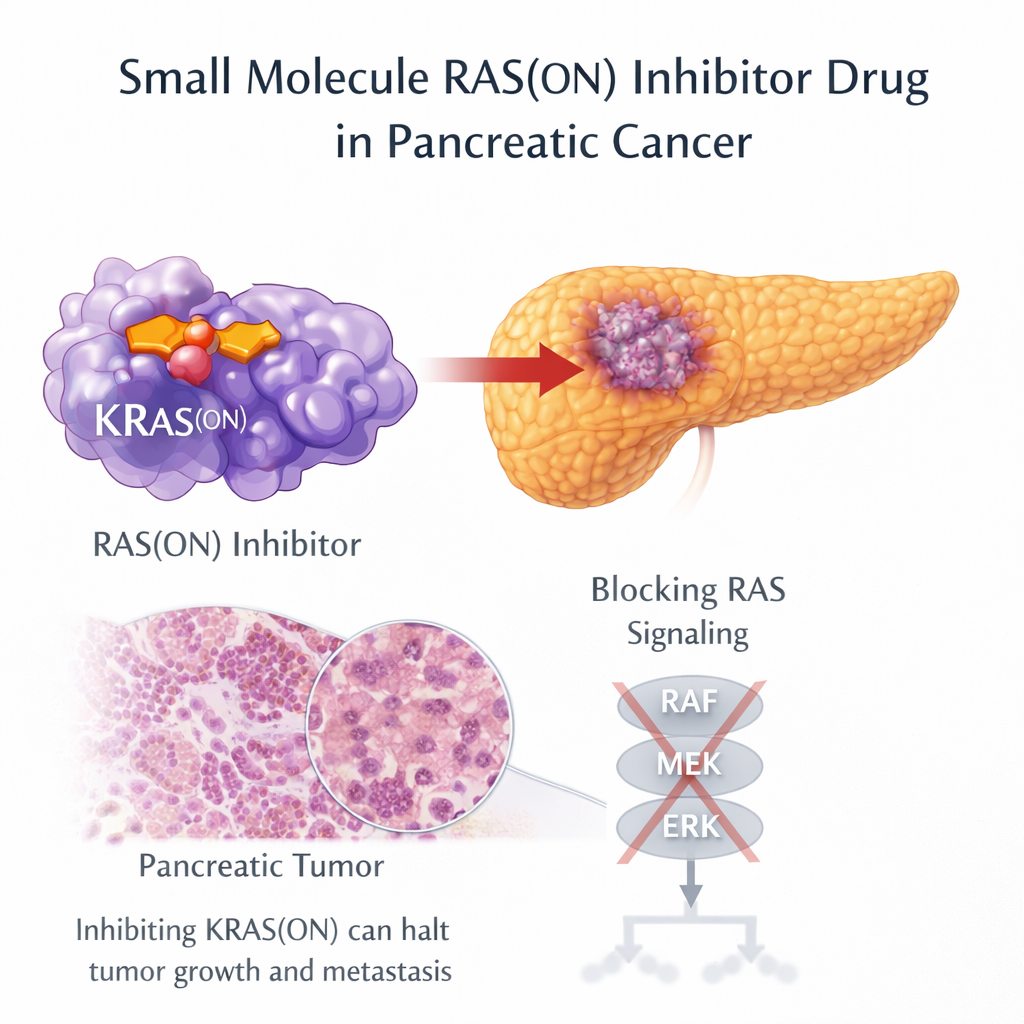
In the Phase 3 randomized RASolute 302 trial of previously treated metastatic pancreatic ductal adenocarcinoma (PDAC), the oral RAS(ON) inhibitor daraxonrasib demonstrated a significant overall survival (OS) benefit compared with standard-of-care (SOC) chemotherapy, nearly doubling median OS (13.2 months vs. 6.7 months). The treatment also improved progression-free survival (PFS) with a favorable and manageable safety profile, with no new safety signals identified. These results support daraxonrasib as a potential new SOC option and validate direct inhibition of active RAS as a clinically meaningful therapeutic strategy in RAS-driven cancers.
Daraxonrasib (RMC-6236)
- Name: Daraxonrasib (RMC-6236)
- Manufacturer: Revolution Medicines
- Drug Class: Targeted, multi-selective, non-covalent small-molecule inhibitor
- Method of Administration: Oral
- Mechanism of Action: First-in-class RAS(ON) inhibitor targeting the active (GTP-bound) RAS protein:
- Multi-selective across RAS isoforms and mutations (including KRAS variants common in PDAC)
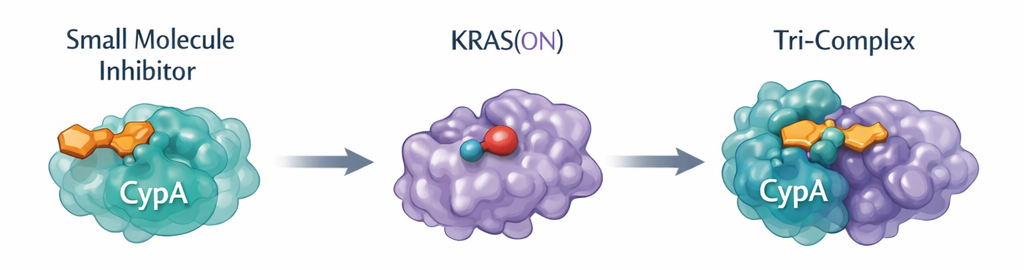
- Uses a tri-complex mechanism
- Binds cyclophilin A → engages active RAS → blocks downstream signaling
RASolute 302 Study Design (NCT06625320)
- Study design: Ongoing, Phase 3, randomized, controlled, multicenter, open-label clinical trial
- Study Objective: Evaluate efficacy and safety of daraxonrasib vs. standard-of-care (SOC) chemotherapy
- Hypothesis: Daraxonrasib improves PFS and OS compared with SOC in previously treated metastatic PDAC
- Participants: 501 patients with PDAC previously treated with 1 prior line of therapy
- Daraxonrasib Arm (Arm A): 250 patients
- 300 mg orally, once daily
- SOC chemotherapy Arm (Arm B): 251 patients
- Gemcitabine ± nab-paclitaxel, FOLFIRINOX / modified FOLFIRINOX, Liposomal irinotecan + 5-FU/leucovorin, or FOLFOX (based on prior first-line therapy)
- Daraxonrasib Arm (Arm A): 250 patients
Enrolled patients harbored a range of RAS variants, including RAS G12 mutations (e.g., G12D, G12V, and G12R), and patients lacking an identified tumor RAS mutation (wild type).
Primary Outcomes
- OS and PFS:
- Median OS: 13.2 months with daraxonrasib vs. 6.7 months with SOC chemotherapy (Hazard Ratio: 0.40, p < 0.0001)
- PFS: Statistically significant improvement with daraxonrasib vs. SOC chemotherapy, consistent with OS findings (exact median values not specified)
Daraxonrasib was generally well tolerated, with a manageable safety profile and no new safety signals. These results confirm a disease-control advantage in addition to a survival benefit.
Clinical Implications
Sources:
- “Daraxonrasib Demonstrates Unprecedented Overall Survival Benefit in Pivotal Phase 3 RASolute 302 Clinical Trial in Patients with Metastatic Pancreatic Cancer | Revolution Medicines.” Revolution Medicines, 2026, ir.revmed.com/news-releases/news-release-details/daraxonrasib-demonstrates-unprecedented-overall-survival-benefit. Accessed 13 Apr. 2026.
- “Revolution Medicines.” Revolution Medicines, 14 May 2025, www.revmed.com/science/. Accessed 13 Apr. 2026.